
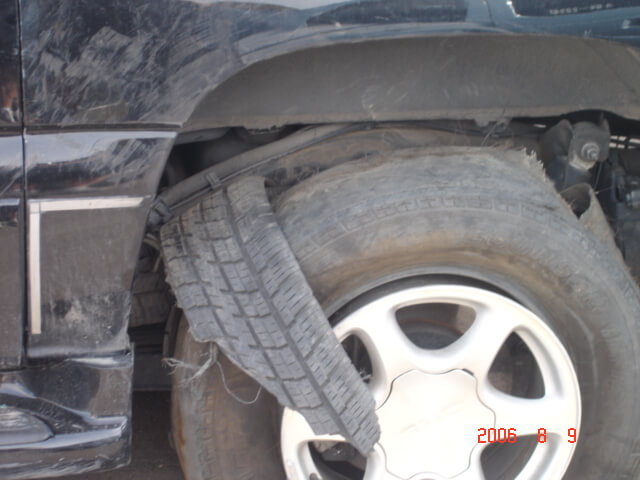
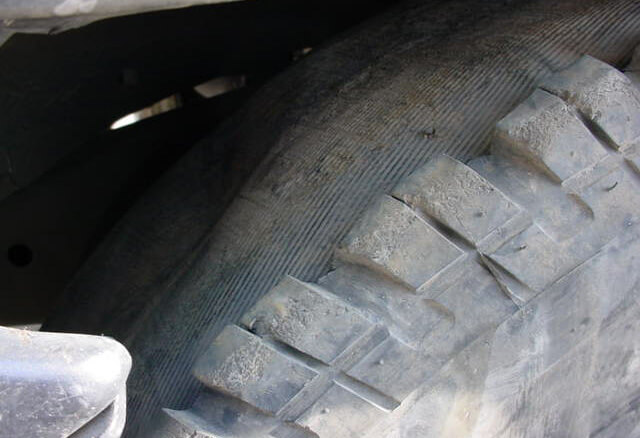
Tire defects, such as tread separations that may cause blowouts, will severely limit the control a driver has over his or her vehicle.
When a radial tire suddenly loses its tread, the driver suffers a far higher risk of control over the vehicle. A tire blowout, or rapid pressure decrease in the remaining core, is often associated with a loss of tire tread, and drastically increases the chance of a dangerous rollover, particularly when it happens to rear tires driving at highway speeds. Loss of control can result in the rear of the vehicle swinging around to become perpendicular to the direction of travel, also known as yawing. If the yawing is not immediately reversed, then the sideways motion often leads to the tire bead separating from the rim, allowing the rim to dig into the pavement, which can propel the vehicle into a roll.
Rollovers may also happen if the vehicle comes into contact with grass, dirt or other drastic surface changes while in sideways motion. Grass or dirt actually “trip” the vehicle, launching it into a rollover. “Tripping” occurs when there is a sufficient amount of sideways movement while the vehicle transitions into a grass or dirt median from normal pavement.
Tire manufacturers have known for a long time that a leading cause of tread and belt separations is inadequate design and placement of the belts and overlying tread. Poor adhesion of the tire components can also be at fault, and may be the result of the following factors:
- Old and expired adhesives
- Improper temperatures
- Unclean manufacturing facilities
- Contaminants introduced during manufacturing (rust, moisture, oxidation, grease, sawdust, gum wrappers, cigarette butts, etc.)
Of all the known problems that can cause belt separation, failure of the metal tire components to stick to the rubber is the most common. The method frequently used to bond these parts involves plating the metal with brass, then applying a rubber compound containing sulfur. If the mixture isn’t properly balanced, then incomplete adhesion occurs. This can also happen when brass plating oxidizes. Check for a shiny appearance, as it may indicate a deficiency in the tread bonding process, which could also be compounded by other defects.
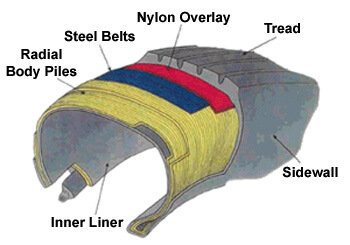
Tire Construction Diagram:
Some tire manufacturers choose to cut costs and do not include the nylon overlay component as shown in the illustration above. Firestone ATX tires are one example of tires that do not include this important stabilization feature.
Tire Blowout or Failure Accident? – Talk to Tire Defect Lawyer Now
If you or a loved one has been involved in a serious accident and you believe a tire failure or tire blowout caused rollover or wreck, then you may have a tire failure lawsuit against the tire manufacturer, used tire dealer or others. Talk to a Board Certified Personal Injury Trial Lawyer with 30+ years of tire failure and defect litigation experience.
No Fees or Expenses Ever Charged Unless a Recovery is Made For You.
Call 24/7 Toll Free 1-800-883-9858 or fill out the online tire defect inquiry form.