
For information, including pictures and details concerning the Cherry v. CSA, Ltd. case, see our tire explosion page.
Tire Inflator Used to Fix a Flat Causes Tire Explosion
While trying to fix a flat, tire service workers and onlookers can be blinded, maimed or even decapitated if the tire explodes. Most of these explosions are from tires that have been previously filled with a can of tire sealant to fix a leak. The propellant inside the can that inflates the tire may be composed of flammable gases, such as butane, propane, or isobutane. If an ignition source is present, such as a small spark from removing a nail from the tire tread, the propellant may ignite, and the tire explodes like a bomb.
Tire experts warn that never, under any circumstances, introduce a flammable substance into a tire. Be sure to inform tire service personnel if you have used any aerosol product to inflate or fix one or more of your tires. In fact, the Rubber Manufacturers Association (RMA) specially warns never introduce any type of flammable substance inside the tire, however even after decades of injuries and deaths, some makers of tire inflators sold at discount stores, gas stations and other places still sell these cans of inflator used to attempt to fix a flat.
Many brands of canned tire sealant today still contain butane, propane or isobutane – all of which are flammable and highly explosive – as the propellant. Other companies, due to safety concerns, have switched from an explosive propellant to a non-explosive option. The problem is obvious. If a spark or flame comes into contact within the contents of the tire, then an explosion resulting in serious injuries and death is possible.
One of the first brands of inflators used to fix flat tires was made by Nationwide Industries and named, quite simply, Fix-A-Flat®. For many years, Fix-A-Flat stood as the leader in this industry, but due to the flammable ingredients and resultant tire explosions, many consumers were severely injured and maimed. Fix-A-Flat soon had competition, namely from Radiator Specialty Company and their Puncture Seal tire repair product. Other companies, such as Johnsen’s, Golden Eagle, S.T.P., Chief, C.S.A. Ltd. and others began to produce similar dangerous tire inflators and aerosol sealants. Faced with tougher competition and numerous serious injury lawsuits, Fix-A-Flat finally changed their ingredients and stopped using the explosive mixture. To this day, it only sells the non-flammable cans. Through the efforts and litigation of products liability attorney David Willis, two different companies forced or convinced to them to stop the sale and distribution of tire inflators that contain flammable gases. Sadly 1,000,000’s of cans of these knock-off brands “tire bombs” are still on store shelves today.
Tire Explodes During Repairing / Plugging a Tire
This tire explosion case of the Willis Law Firm involved a young man named Patrick Cherry of Houston, Texas – who was working at a Chevron gas station when the tire he was trying to fix exploded. The explosion threw him back some 15 to 20 feet away, causing massive bodily injuries.
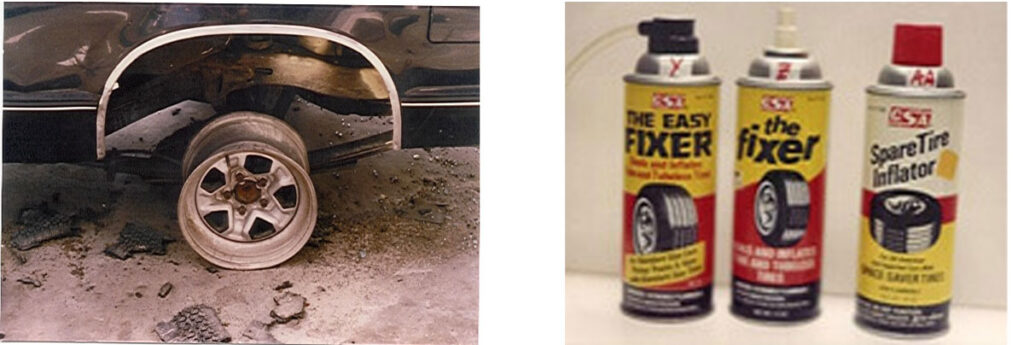
Remnants of tire after tire inflator explosion in the Cherry case after the explosion..
Mr. Cherry was life-flighted from the gas station and recovered after months of hospitalization and therapy. The ignition source that lit the flammable gas mixture was the tire reamer he was using to clean the puncture hole in the tire tread. As Mr. Cherry went about his repairs, the tire reamer sparked when it came into contact with a steel belt within the tire.
In this tire explosion lawsuit, the Willis Law Firm hired a local engineering and testing lab to duplicate the explosive and deadly force from the tire explosion in question. The following three photographs convey the energy from such a blast.
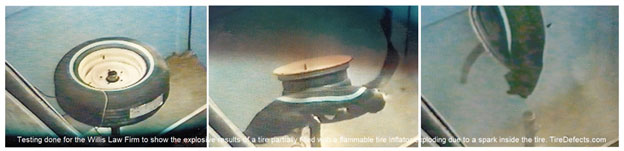
After months of discovery, tire defect attorney David Willis obtained a confidential settlement for Mr. Cherry, and after this lawsuit, the defendant can manufacturer ceased production of this type of product.
Another Tire Explosion Case – Victim Blinded
The next tire explosion case of the Willis Law Firm involved a retired mechanic in San Antonio, Texas who was helping a neighbor. On a Sunday morning, they tried to fix a small pinhole leak in the rim of a mobile home tire. The neighbor had used a can of Puncture Seal, made by Radiator Specialty Company, in hopes that the slow leak would stop. Our client inspected the tire and found the pinhole leak in the rim. After deflating the tire, he attempted to weld the pinhole closed. Suddenly, the tire and rim exploded, blinding him in both eyes, maiming his hand and causing a massive loss of hearing. A spark from the weld ignited the flammable mixture of propellant from the Puncture Seal.
The massive nature of the explosion caused the tire to debead from the rim and actually bent the rim as indicated in the pictures below.
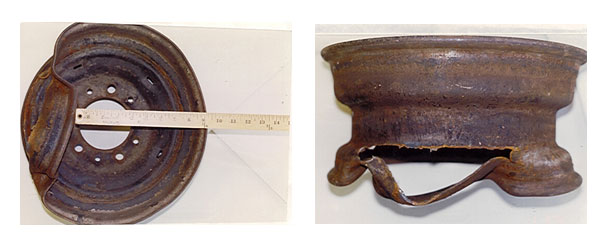
defendants, Radiator Specialty Company, argued that the tire did not explode because of the Puncture Seal, but rather by overheating the air in the tire. At the conclusion of the case, it was announced that Radiator Specialty Company was changing their formula. They would no longer be producing Puncture Seal with flammable gases, such as butane, propane or isobutene, as the propellant for their tire sealant products.
Can of Tire Inflator Leaks inside Vehicle and Explodes in Flames
A stored can of Johnsen’s tire sealant underneath the leaks butane inside the cab of a clients truck. seat of her pickup truck. Without her knowledge, the butane from the propellant had leaked out from a faulty seal around the nozzle, which formed a puddle of flammable gas on the floorboard of her car. When she lit a cigarette, the entire car burst into flames. She suffered numerous second and third degree burns from the flash fire

The Willis Law Firm hires fire and explosion engineers to conduct test to show the flammable nature of a leaking can of flammable tire inflator. This test was conducted with a one can of tire inflator sprayed into the trunk of a car. The resulting fire ball helped demonstrate the nature of the flames that Ms. Knaphus endured inside the cab of her truck. Mr. Willis settled her case the within months after it was filed, recovering his client a confidential sum.
Willis Takes on the Tire Inflator Industry
Many tire explosion cases around the nation involve injuries such as blindness, brain damage, severe lacerations and even a decapitation. The tire sealants, aerosol tire inflators and similar products that contain a flammable gas in their propellant mixture should have never been produced and sold to the public in the first place. A flammable and explosive gas should also never be introduced into a closed container, such as a tire, where it can stay for days, weeks, months or even years before it has the chance to maim, blind or kill. Most sealant companies have changed their formulas, but a few are still subjecting unsuspecting consumers to this ticking tire bomb. To them, punitive or exemplary damages are sought, and many times awarded, by outraged juries that a company on public notice of the dangers of tire explosions would continue to sell such dangerous products.
We are proud of the work we have done at The Willis Law Firm to help clean up the tire sealant industry. Mr. Willis is routinely sought after as an associate or lead counsel by other attorneys on products liability cases, particularly when it comes to helping with discovery issues. Mr. Willis has been interviewed numerous times by many of the leading tire industry magazines and publications, and appeared on many television stations in the United States, discussing the dangers of these tire sealants in order to raise public awareness.
*Willis is believed to have represented more clients from tire inflator explosions than any other lawyer in the nation.
Dangerous Tire Sealant Personal Injury Attorney
If you or a loved one has been seriously injured, maimed, blinded or even killed as a result of one of more of these dangerous tire sealants – or any other flammable or explosive product – and you would like to know what can be done to protect your legal rights, please get in touch with us for a free confidential consultation.
Due to the nature of these cases, all of the evidence at the accident scene is important and should be preserved for tire experts to study and examine. Don’t Delay, Call us toll-free at 1-800-883-9858, or send us an email.