Tire Defects and Failures
- Tire Defects
- Tire Failure / Blowouts
- SUV Rollovers and Roll Overs
- Defective Tire Treads
- Tire Tread Separation
- Manufacturer Tire Defects
- Firestone Tread Problem
- Safety Recalls
Rollover Lawsuits
Tire Recalls
- Bridgestone Tire Recall
- Continental Tire Recall
- Cooper Tire Recall
- Firestone Tire Recall
- General Tire Recall
- Goodyear Tire Recall
- Kelly Springfield Tire Recall
- Yokohama Tire Recall
Other Tire Problems
- Agricultural AG Tires
- RV Tires Failures
- ATV Tires Failures
- Motorcycle Tires Failures
- Consumer Tire Defects
- Aerosol Tire Inflators
- Multi-Piece Rim Explosion
- Tire Bead Explosions
- 16.0" vs. 16.5" Mismatch
Tire Information
- Tire Dealer Associations
- Passenger Tire Distributors
- Light Truck Tire Distributors
- Tire Markings
- Mounting and Demounting
- Tire Manufacturers
- Legal Action
The Willis Law Firm
One Houston Center
1221 McKinney, Suite 3333
Houston, TX 77010
1-800-883-9858
Firestone Tire Failure
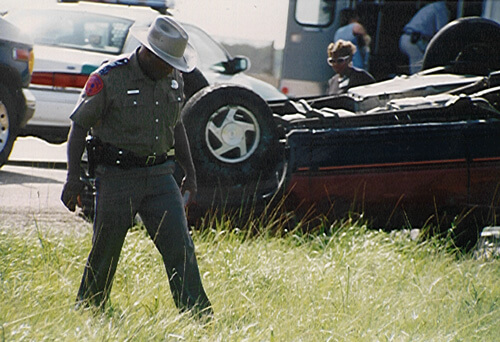
A tire failure or blowout at highway speeds can lead to a severe wreck or rollover accident with catastrophic injuries and losses. If a Firestone tire suffers a tread separation, ply / belt loss, blowout, tread loss, sidewall failure, detread or any type of sudden deflation or tire failure, the vehicle may lose control and wreck or roll over. The Willis Law Firm has investigated hundreds of tire defect and rollover accident cases nationwide on behalf of seriously injured motorists and their families for over 20 years. If you have been in a serious accident or rollover in which you believe a Firestone tire failure may have caused or contributed to the accident, then give our law firm a call and speak with a lawyer or attorney today. Our law firm offers a free case evaluation. Call us: Toll Free 1-800-883-9858.
Firestone Passenger Tires
Firestone makes millions of tires a year. Firestone's more popular passenger tire models include:
Ultra High Performance Summer
- Firehawk SZ50
- Firehawk SZ50 EP RFT
- Firehawk Wide Oval
- Firehawk Wide Oval RFT
High Performance All-Season
- Firehawk GT
- Firehawk GTA 02
- Firehawk GTA-03
Performance All-Season
- Firehawk Indy 500
Grand Touring All-Season
- Firehawk LH
Standard Touring All-Season
- Affinity HP
- Affinity Touring
- Affinity Touring 02
- Affinity Touring 04
Passenger All-Season
- Affinity LH30
- FR680
- FR680-02
- FR690
Firestone Light Truck Tires and SUV Tires
Firestone's more popular light truck and suv tire models include:
Highway All-Season
- Destination LE
- Transforce HT
- Wilderness LE
On/Off-Road All-Terrain
- Destination A/T
- Transforce AT
Off-Road Maximum Traction
- Destination M/T
About Firestone Tire and Rubber Company
The Firestone Tire and Rubber Company was founded by Harvey Firestone in 1900 to supply pneumatic tires for wagons, buggies, and other forms of wheeled transportation common in the era. Firestone soon saw the huge potential for marketing tires for automobiles. The company was a pioneer in the mass production of tires. Firestone used this relationship to become the original equipment supplier of Ford Motor Company automobiles, and was also active in the replacement market.
History of Firestone
An early advertisement used in 1903 depicting Firestone products.
Firestone was originally based in Akron, Ohio, also the hometown of its archrival, Goodyear Tire and Rubber Company. The company initiated operations in 1900 with 12 employees. Together, Firestone and Goodyear were the largest suppliers of automotive tires in North America for over three-quarters of a century. In 1906 Firestone was chosen by Henry Ford for the first mass-produced automobiles in America.
In 1919 The Firestone Tire and Rubber Company of Canada was incorporated in Hamilton, Ontario and in 1922 The first Canadian-made tire rolled off the line on September 15.
In 1928 the company built a factory in Brentford, London, England, for long an Art Deco landmark on a major route into the city. This closed in 1979.
In 1961, Firestone acquired the Dayton Tire division from the Dayco Corporation.
In late 1979, Firestone brought in John Nevin, the ex-head of Zenith Electronics as president to save the hemorrhaging company from total collapse. It was more than a billion dollars in debt at the time, and losing 250 million dollars a year. Nevin closed nine of the company's seventeen manufacturing plants, including six in one day. He moved the company from its ancestral home in Akron to Chicago. He spun off non-tire related businesses, including the Firestone Country Club. It was considered a deliberate plan to boost the stock price, and it paid off. In 1988 after discussions with Pirelli, Nevin negotiated the sale of the company to the Japanese company Bridgestone. Bridgestone Corporation Japan was able to buy the company for much less than it had been worth a decade and a half earlier. The combined Bridgestone / Firestone North American operations are now based in Nashville, Tennessee.
Firestone 500 Tread Separation Problem
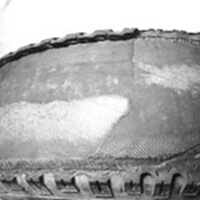
Radial tires were introduced to the US market by rivals Goodrich and Michelin in the late 1960's, and Firestone lacked one. The first radial tire developed and produced by Firestone was the ill-fated Firestone 500 Radial. Manufacturing of the new tire was performed on equipment designed to manufacture bias-ply tires.
During the 1970s, Firestone experienced major problems with the Firestone 500 radial. The Firestone 500 steel-belted radials began to show signs of separation of the tread at high speeds. While the cause was never proved, it is believed that the failure of bonding cements used by Firestone to hold the tread to the tire carcass, may have allowed water to penetrate the tire which in turn may have caused the internal steel wire to corrode. In March 1978, NHTSA announced publicly a formal investigation into defects of the Firestone 500. The NHTSA investigation found that the tread separation problem was most probably a design defect affecting all Firestone 500's.
In 1973, only two years after the 500's debut, Thomas A. Robertson, Firestone's director of development wrote an internal memo stating, "We are making an inferior quality radial tire which will subject us to belt-edge separation at high mileage." Firestone introduced strict quality control measures in an attempt to fix the inherent problems, however they were not successful in totally eliminating the basic faults. In 1977 a recall of 400,000 tires produced at the problematic Decatur plant was initiated. Firestone was considered to be less than cooperative with the NHTSA during the agency's investigation into the Firestone 500. Firestone blamed the problems on the consumer, stating underinflation and poor maintenance.
On October 20, 1978, Firestone recalled over 7 million Firestone 500 tires, the largest tire recall to date. Congressional hearings into the 500 also took place in 1978. The tire was found to be defective and the cause of 34 deaths. Firestone was fined $500,000 which was the largest fine imposed on any American corporate entity at that time. Multiple lawsuits were settled out of court and the constant negative publicity crippled the company's sales and share price.
Ford Explorer Rollover Problem
In 1996, several state agencies in Arizona began having major problems with Firestone tires on Explorers. According to news reports, various agencies demanded new tires, and Firestone conducted an investigation of the complaints. Firestone tested the tires and asserted that the tires had been abused or under-inflated.
On September 6, 2000, in a statement before the US Senate Appropriations Transportation subcommittee the president of the consumer advocacy group Public Citizen, Joan Claybrook, stated:
- "...There are a number of parallels between this recall in 2000 and the 1978 recall of the Firestone 500....there was a documented coverup by Firestone of the 500 defect, spurred by the lack of a Firestone replacement tire. When the coverup was disclosed, the top management of the company was replaced as Firestone was severely damaged in reputation and economically. But a key difference is that the Firestone 500 was used on passenger cars, which rarely rolled over with tire failure. NHTSA documented 41 deaths with the 500, a recall, involving seven million tires."
The report went on to indicate that Ford also had a major role in the problems. It stated that The Ford Motor Company had instructed Firestone to add a nylon ply to the tires it manufactured in Venezuela for additional strength and that Ford had made suspension changes to the Explorer model available in Venezuela. Ford did not specify adding the nylon ply for US-made Firestone tires nor did it change the Explorer suspension on US models.
An abnormally high failure rate in Firestone's Wilderness AT, Firestone ATX, and ATX II tires resulted in multiple lawsuits, as well as an eventual mandatory recall. In 2001 Bridgestone/Firestone severed its ties to Ford citing a lack of trust. The lack of trust came about concerns that Ford had not heeded warnings by Bridgestone/Firestone relating to the design of the Ford Explorer. In 2006, Firestone announced renewed efforts to recall tires of the same model recalled in 2000 after the tires were linked to recent deaths and injuries. Although Firestone estimates 97% of the tires were replaced in the 2000 recall, concern still exists over spare tires that many owners did not think to replace during the 2000 recall. Part of this effort was a new advertising campaign in an attempt to reach the 5% of customers that still had not acted on its voluntary recall program. The recall/replacement program was supported by a comprehensive advertising and consumer outreach campaign and over 6.3 million tires were replaced of the total 6.5 million affected. This still leaves approximately 200,000 tires out there somewhere. While the company believes that most of those tires unaccounted for have probably been scrapped long ago it is still trying to locate as many as possible.
The vice president of Quality Assurance for Bridgestone Firestone North America Tire, LLC; Mike Kane, stated, "Even though there are only a small percentage of these tires believed to be still in use, we are continuing to put safety first and are implementing this campaign to try and reach a group of consumers whose tires have not been recovered."
Tire Defects - Serious Accident and Injury Legal Help
If you or a loved one have been seriously injured, or a loved one has been killed, as the result of a tire defect, tire failure, tread separation, tire blowout, rollover accident, or any other serious injury accident, then please call us to discuss your legal rights to a potential product liability lawsuit. Please fill out our online form by following the link below or call us right now: Toll Free 1-800-883-9858.
![]() Click Here for a Free Tire Defect Case Evaluation |
- Defective Tire Valve Stems from China
- Defective Goodyear Dunlop Tire Causes Severe Wreck
- DOT Tire Code Numbers, Ratings and ID Markings
- Cooper Dominator Sport A/T Tire Failures and Recall News
- Being Notified of Tire Recalls and Vehicle Recalls
- Tire, Product and Vehicle Safety Defects
- Steps for Maintaining Proper Tire Pressure
- Checking Tire Pressure
- Understanding Tire Pressure and Load Limits
- Tire Pressure and Loading